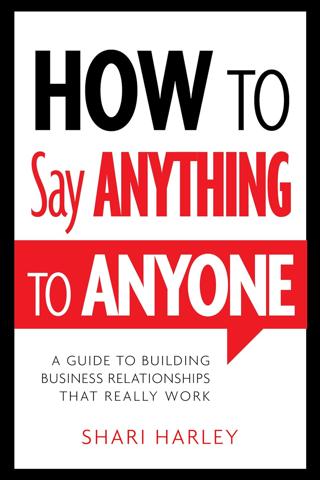
Critical Review of How to Say Anything to Anyone
A Guide to Building Business Relationships That Really Work
By: Shari Harley
Shari Harley's book "How to Say Anything to Anyone: A Guide to Building Business Relationships That Really Work" has been well-received for its practical advice on communication in the workplace, but it is not without criticism. One common critique from the scientific community relates to the lack of empirical backing for some of the communication strategies she suggests. Communication experts often emphasize the importance of evidence-based strategies when it comes to building effective interpersonal relationships, and while Harley’s advice is pragmatic and anecdotal, it sometimes lacks a basis in rigorous scientific research. This can be seen as a limitation for readers seeking techniques grounded in the latest research on effective communication and organizational behavior.
Another scientific critique centers around the universality of Harley's advice. Communication strategies can be highly context-dependent, varying significantly across different cultures, industries, and organizational hierarchies. Critics argue that some of the advice in the book may not be universally applicable, as it assumes a level of directness that might be effective in American business contexts but could be perceived as inappropriate or even offensive in other cultural settings. Studies in cross-cultural communication emphasize the importance of tailoring communication styles to the cultural norms of the organization, something that the book does not fully address.
Furthermore, the book has been critiqued for its simplified approach to complex communication dynamics. Human communication, particularly in organizational settings, involves subtle nuances and often requires an understanding of non-verbal cues, emotional intelligence, and conflict resolution strategies that are not extensively covered in Harley’s guide. Communication scholars may argue that the book fails to delve deeply enough into the psychological and relational elements of workplace interactions. As a result, readers might find the strategies superficial when dealing with more intricate communication issues.
Lastly, some critics point out the potential for Harley’s advice to encourage overly candid communication, which could lead to unintended negative consequences. Research into organizational behavior suggests that too much honesty, or honesty delivered without careful consideration of timing and delivery, can harm relationships and decrease workplace harmony. Harley emphasizes direct communication, but scientific studies might suggest a more balanced approach where honesty is tempered with empathy and strategic delivery to ensure positive outcomes. Readers might benefit from a more nuanced discussion on when and how to apply these communication techniques effectively within varied workplace scenarios.
Overall, while "How to Say Anything to Anyone" offers practical tips for fostering open dialogue and improving workplace relationships, its lack of empirical grounding and consideration for cultural and contextual variables limits its effectiveness as a comprehensive guide in the eyes of the scientific community.
<< Back to the book summary