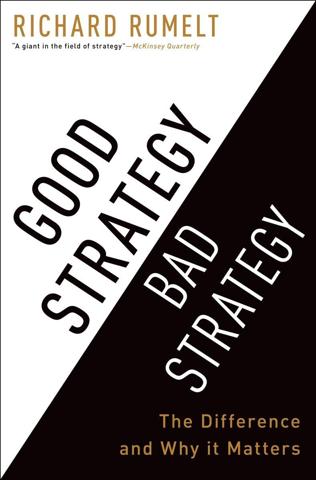
O revizie critică a cărții Good Strategy Bad Strategy
The Difference and Why It Matters
De: Richard Rumelt
"Good Strategy Bad Strategy: The Difference and Why It Matters" by Richard Rumelt, a well-regarded book in the field of strategic management, has received praise for its clear distinction between effective and ineffective strategy. However, certain critics have pointed out areas where they believe the book falls short, which, while not diminishing its overall impact, suggest areas for improvement or deeper exploration.
One common criticism is that Rumelt's definitions of "good" and "bad" strategy can be somewhat subjective. While he provides illustrative examples of both, some readers feel that the criteria for what constitutes a good strategy are not universally applicable or adequately defined. The distinction is often drawn through anecdotal evidence rather than through a systematic framework, which may leave some readers wanting a more robust methodological foundation to evaluate strategy objectively.
Another critique centers on the book’s applicability to all types of organizations. Some critics argue that Rumelt's insights are primarily geared towards large corporations and may not translate well to small businesses or nonprofit organizations. The examples and case studies in the book often relate to established companies with considerable resources, which can limit the relevance for leaders of smaller entities struggling with different challenges. The need for adaptable strategic frameworks for diverse organizational contexts is less explored and could have broadened the book's appeal and practical application.
Further, while the book emphasizes the importance of diagnosing problems and setting coherent action plans, some critics point out that it lacks depth in providing actionable steps on how to effectively implement these strategies. For practitioners who seek guidance on execution, the book may fall short, as it primarily focuses on the theoretical underpinnings of strategy without diving deep into the nuances of applying these principles in dynamic real-world environments. This can leave a gap for readers who are looking for comprehensive advice on bridging the gap between strategic formulation and tangible, day-to-day actions.
Lastly, some have argued that while Rumelt effectively critiques oversimplified business jargon and “bad strategy,” the book sometimes lacks engagement with emerging strategic concepts and innovations. As the business landscape evolves rapidly with technological advancement and globalization, incorporating discussions around these themes could have strengthened the book's modern relevance. Addressing how digital transformation and other recent trends impact strategy formulation and execution could enrich the reader's understanding of what constitutes a good strategy in today’s complex environment.
<< Înapoi la rezumatul cărții