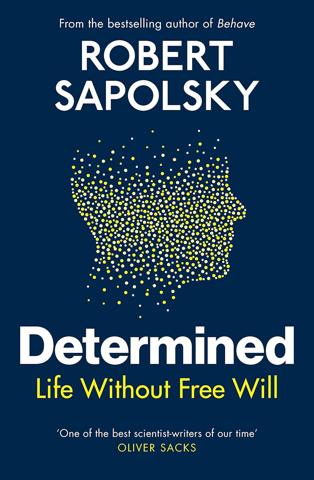
Critical Review of Determined
Life Without Free Will
By: Robert M. Sapolsky
Determined: Life Without Free Will by Robert Sapolsky is a thought-provoking exploration of the concept of free will through a scientific lens. Sapolsky, a renowned neuroscientist and biologist, argues that free will is an illusion and that human behavior is entirely determined by biological, environmental, and genetic factors. While the book has been praised for its comprehensive analysis and engaging writing, it has also faced criticism from various quarters for several reasons.
One major criticism is that the book leans heavily on reductionism, attributing human behavior predominantly to biological determinism. Critics have argued that Sapolsky's approach oversimplifies the complexities of human experience and the interplay of multiple influences on behavior. Critics suggest that while biology and genetics play a significant role, factors such as culture, individual psychology, and social interactions must also be considered to fully understand human actions. The reductionist view might neglect the emergent properties of human consciousness and the subjective experience that many people identify with free will.
Furthermore, some philosophers and scientists have challenged the philosophical implications of Sapolsky's conclusions. They argue that denying free will might undermine moral responsibility and ethical accountability. If human actions are entirely predetermined by biological processes, it raises difficult questions about culpability and justice. Critics worry that such a deterministic view could be used to justify negative behaviors or diminish personal agency. This perspective opens up broader ethical debates about how society should understand and assign responsibility for actions.
Another area of critique is the interpretation of neuroscientific findings. While Sapolsky draws extensively on neuroscience, some specialists argue that the data does not incontrovertibly lead to a denial of free will. Neuroscience is a rapidly evolving field, and the interpretation of data related to consciousness and decision-making is still under active debate. Sapolsky's conclusions are seen by some as jumping ahead of current scientific consensus, which still contains considerable uncertainty about the mechanisms underpinning conscious choice and intentionality.
Finally, there is the concern that the book does not adequately address the subjective experience of free will, which remains a compelling aspect of human consciousness for many. People generally feel as though they are making autonomous choices, and dismissing this experience entirely might overlook the importance of perceived agency in psychological well-being. Critics argue that more attention should be paid to reconciling the subjective and objective perspectives on free will, as both hold significant implications for individual and societal functioning. While "Determined" makes a strong case for reconsidering the role of determinism in human behavior, the discussion about free will is far from settled and continues to stimulate vibrant debate across disciplines.
<< Back to the book summary