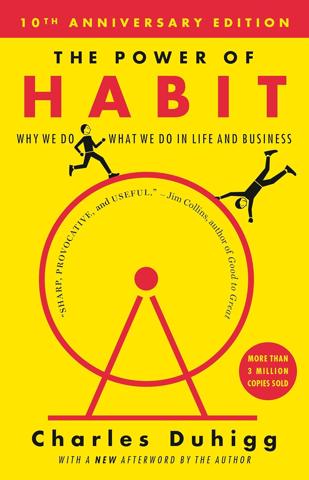
Critical Review of The Power of Habit
Why We Do What We Do in Life and Business
By: Charles Duhigg
"The Power of Habit: Why We Do What We Do in Life and Business" by Charles Duhigg has been both widely acclaimed and critiqued since its publication for its discussion on the science of habit formation. One prevalent criticism is centered on the book’s oversimplification of complex neuroscientific concepts. While Duhigg effectively uses engaging stories to explain the habit loop – cue, routine, reward – critics argue that this model does not fully capture the nuanced biochemical and neurological processes underlying human behavior. Neuroscientists have pointed out that while the concept of the habit loop is a useful heuristic, it might be misleading for readers to assume that all habits or changes in behavior can be distilled to this model, as it does not encompass the complexity of brain structures and functions involved in habit formation and change.
Another common critique is related to the anecdotal nature of evidence presented in the book. Duhigg relies heavily on case studies and stories to illustrate his points, which, while compelling, does not necessarily equate to a strong scientific basis. Critics argue that anecdotal evidence, without a robust framework of empirical research studies backing it, can lead to overgeneralization. Some reviewers have noted that research cited in the book is selectively chosen and sometimes stretched to support the narrative, potentially leading readers to draw conclusions that may not be fully supported by the broader scientific literature on habit formation and behavioral change.
Furthermore, scholars have pointed out that the emphasis on individual habits largely overlooks the influence of broader systemic and environmental factors on behavior. While the book effectively catalogs changes at the individual level, critics suggest that it could have delved deeper into how structural and societal patterns influence personal habits. By focusing predominantly on personal factor-driven habit change, some argue that it might inadvertently prop up the notion that individuals are solely responsible for their behavior, overlooking the complexities of socio-economic factors, mental health issues, and other external influences that also play pivotal roles.
Lastly, some professionals in the field of psychology and behavioral science have criticized the book for lacking a clear framework for implementing habit change in practical, sustainable ways. While "The Power of Habit" offers readers an understanding of how habits work and suggests that knowing the habit loop can help change them, the guidance on how to maintain long-term habit changes is seen by some critics as vague or inadequately detailed. The strategies provided are criticized for being somewhat superficial, which could leave readers unsure about applying them in diverse real-world scenarios, particularly when facing deeply ingrained or complex habit-related challenges.
<< Back to the book summary