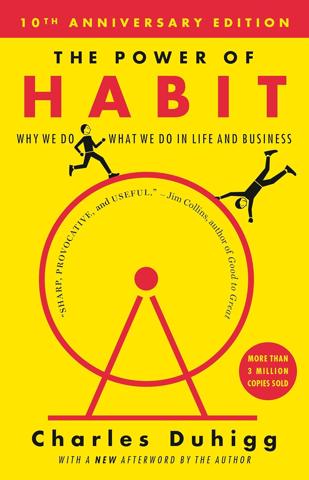
The Power of Habit
Why We Do What We Do in Life and Business
By: Charles Duhigg
Intro:
"The Power of Habit: Why We Do What We Do in Life and Business" by Charles Duhigg is an insightful exploration into the nature of habits and their profound impact on various aspects of human life, from personal routines to corporate practices and social movements. Drawing from a rich tapestry of research in psychology and neuroscience, as well as compelling real-world stories, Duhigg demystifies the intricate mechanics behind habit formation and change. At the heart of this narrative is the "habit loop," a psychological pattern consisting of a cue, a routine, and a reward. By understanding and manipulating these components, individuals and organizations can effectively transform undesirable habits or establish beneficial new ones. The book is divided into three parts, each focusing on different spheres of habit-driven behaviors. The first part delves into individual habits, illustrating how routines are formed and altered, with examples like the story of a man who radically changed his life through the recognition and adjustment of his habit loops. In the second part, Duhigg examines the habits of successful organizations, showcasing studies from companies like Procter & Gamble and Starbucks, where altering employee habits resulted in tremendous improvements in productivity and customer satisfaction. The final section expands the scope to societal habits, exploring how habit patterns influence social change and movements, such as the civil rights movement, and how leaders can harness this understanding to drive societal progress. Duhigg’s engaging writing style and thought-provoking insights make "The Power of Habit" not just a compelling read but also a practical guide for anyone looking to make significant changes in their personal or professional life. By elucidating the principles that govern habits, he provides readers with the tools they need to recognize, comprehend, and adapt the automatic routines that shape their lives. This transformative potential of habit analysis underscores the book's primary message: while habits may be powerful, they can be reshaped to serve our goals, paving the way for substantial and lasting change.
The Power of Habit by Charles Duhigg explores the science behind habits, how they are formed, and how we can change them to improve our lives and businesses. The book is structured into three main parts, each discussing different aspects of habits.
Introduction: The Habit Loop
The book begins by introducing the concept of the "habit loop," a neurological pattern that governs any habit. It consists of three elements: a cue, a routine, and a reward. Duhigg explains how this loop is ingrained in our brains and that by understanding it, we can start to change our habits.
One key example is the story of Eugene Pauly, a man who lost his short-term memory but was still capable of forming new habits, illustrating how habits operate beneath the surface of conscious thought. This foundation sets the stage for the rest of the book, highlighting the power and potential of modifying these unconscious patterns.
Part One: The Habits of Individuals
In this section, Duhigg discusses how habits emerge within individual lives. He uses examples like backing out food scientists created the habit of daily tooth brushing by adding a tingling sensation to Pepsodent toothpastes and the story of Lisa Allen, who transformed her life by changing a core habit of smoking.
The analysis covers the idea of "keystone habits," which are small changes or habits that people introduce into their routines that unintentionally carry over into other aspects of their lives. This section emphasizes that identifying and altering keystone habits can help individuals achieve personal change and growth.
Part Two: The Habits of Successful Organizations
Here, Duhigg shifts focus from individual habits to the role of habits in businesses and organizations. He introduces the example of Paul O'Neill at Alcoa, who transformed the company by concentrating on one habit: safety. This transformed the company culture and led to increased profitability and productivity.
The concept of "organizational habits" is introduced, showcasing how behaviors within organizations develop over time and become ingrained. Duhigg explores how companies manipulate routines to influence purchasing decisions, as seen with Starbucks' customer service routines designed to promote willpower and success among employees.
Part Three: The Habits of Societies
In the final section, Duhigg addresses how habits play a role at a societal level. He touches on movements and societal change, using the civil rights campaigner Martin Luther King Jr. and the Montgomery bus boycott as examples of how changing one small habit can have widespread societal effects.
This section also delves into how social habits are instrumental in societal structures and the roles they play in maintaining order or creating upheaval. Duhigg suggests that societal habits can be transformed by understanding and influencing the underlying habit loops.
Conclusion: The Neurology of Free Will
Duhigg concludes with a discussion on the implications of habit awareness for personal responsibility and free will. He explains that by understanding how habits work, individuals and organizations have the power to seize control over their behaviors.
The book ends on an optimistic note, asserting that habits are not destiny. With effort and awareness, we can reshape our habits and thus shape our futures.
Overall Insights
The Power of Habit provides powerful insights into the nature of habits and their profound effect on our lives. By combining scientific research with engaging stories, Duhigg illustrates how understanding the habit loop can offer transformative potential, both individually and collectively. The book acts as both a guide and a call to action for anyone looking to harness the power of habits in making positive changes.