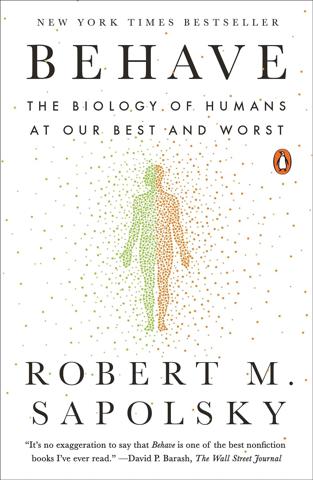
Critical Review of Behave
The Biology of Humans at Our Best and Worst
By: Robert M. Sapolsky
Behave: The Biology of Humans at Our Best and Worst by Robert Sapolsky is a widely acclaimed book that delves into the complex interactions of biology, psychology, and sociology that govern human behavior. While the book has been praised for its depth and accessibility, it has also faced criticism on several fronts.
One major critique is that the book attempts to cover an overwhelming breadth of disciplines, from neurology and endocrinology to sociology and anthropology. Some critics argue that this broad approach, while intellectually ambitious, sometimes sacrifices depth for breadth. They suggest that in trying to weave together findings from so many areas, the book occasionally glosses over complexities or debates within specific fields. For instance, neuroscientists might argue that certain neurological concepts are oversimplified, while sociologists might contend that some social theories are presented without sufficient context or nuance.
Another criticism is related to the deterministic tone that some readers perceive in Sapolsky's analysis. In exploring how biology impacts behavior, the book sometimes gives the impression that humans are primarily the product of their neurobiology and genetic predispositions, potentially diminishing the role of free will and individual agency. Critics argue that this could lead to a reductionist view of human behavior, where complex social behaviors are overly attributed to biological factors, potentially ignoring the influence of culture, personal experiences, and conscious decision-making.
Moreover, some reviewers have pointed out that while Sapolsky is a masterful storyteller, the book can sometimes be overwhelming due to its dense and information-rich narrative. Readers may find themselves inundated with data and studies, which, while fascinating, can be hard to digest in a single reading. The extensive use of scientific jargon and detailed explanations may not be accessible to all readers, potentially limiting its appeal to a broader, non-specialist audience.
Lastly, while the book is praised for its humor and engaging writing style, some argue that this stylistic choice might occasionally undermine the seriousness of the subject matter. Critics suggest that the lighthearted tone, while making the book more readable, can sometimes detract from the gravity of the scientific insights presented, leading to a potential underestimation of the challenges involved in understanding human behavior. However, this is often seen as a matter of personal preference, with many readers appreciating the blend of rigor and accessibility.
<< Back to the book summary