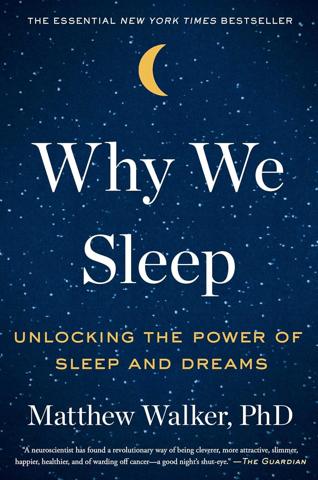
Critical Review of Why We Sleep
Unlocking the Power of Sleep and Dreams
By: Matthew Walker
"Why We Sleep: Unlocking the Power of Sleep and Dreams" by Matthew Walker has indeed been influential in bringing public attention to the importance of sleep. However, it has also faced criticism from some academics and professionals in related fields who have raised questions about the accuracy and presentation of scientific data in the book.
One of the primary criticisms arises from the perceived overgeneralization and exaggeration of claims regarding the detrimental effects of insufficient sleep. Critics argue that while sleep deprivation undoubtedly has negative impacts, the way these effects are portrayed in the book may be overly alarmist and not always supported by rigorous scientific consensus. For instance, the book's hammering home of the idea that even minor reductions in sleep can lead to severe health consequences does not universally reflect the diversity of scientific findings, which can often be more nuanced.
Another specific critique involves the way certain statistics and studies are presented. Some reviewers have pointed out instances where Walker reportedly misrepresents research findings or cites data without adequate context or specificity. For example, Alexey Guzey, a writer who critically examined the book, argued that some of Walker’s claims lack direct support from the original studies and that certain references are either missing or inaccurately described. This raises concerns about the reliability of the information presented to readers, especially non-experts who may not have ready access to original sources for verification.
Moreover, some sleep scientists have noted a tendency in the book to overlook or downplay the complexities and ongoing debates within sleep research. While Walker emphasizes a clear narrative about sleep's health benefits and detriments, critics argue that such a narrative might oversimplify scientific discourse that is still evolving. Complex topics like sleep architecture, variability in individual sleep needs, and differing impacts of sleep deprivation across populations can be reduced to more straightforward, less contentious conclusions in Walker's book.
Despite these critiques, many agree that Walker’s book has played a significant role in increasing public awareness about sleep’s importance. It effectively communicates the vital role of sleep in a relatable and engaging manner, which is crucial for reaching a broad audience. However, these criticisms suggest the need for readers to approach the material with a critical mind and to consider a wider array of scientific literature when forming their understanding of sleep health.
<< Back to the book summary