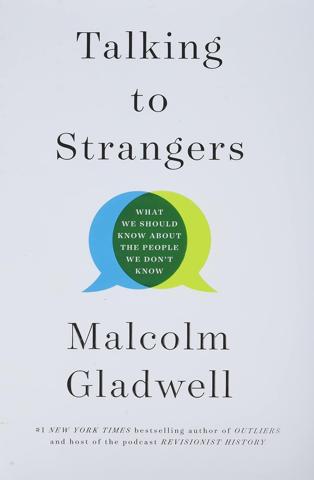
Critical Review of Talking to Strangers
What We Should Know about the People We Don't Know
By: Malcolm Gladwell
"Talking to Strangers: What We Should Know about the People We Don’t Know" by Malcolm Gladwell attempts to explore the complexities and misunderstandings that occur when people interact with strangers. Despite its commercial success and thought-provoking content, the book has attracted criticism from various scholarly circles. Critics have pointed out methodological issues, simplification of complex subjects, and potential misinterpretations or misrepresentations of the research Gladwell references.
One significant criticism is directed at Gladwell's use of scientific research and case studies, which some experts feel is sometimes superficial or selective. Critics argue that Gladwell tends to simplify intricate psychological and sociological concepts to fit his narrative. The concern is that by cherry-picking data or offering an overly simplistic analysis, the book can potentially misinform readers about the nuances of human behavior. For example, some scholars have pointed out that Gladwell’s interpretation of default to truth theory, a concept introduced by psychologist Timothy R. Levine, lacks depth and context, leading to misunderstandings about its application in real-world scenarios.
Additionally, Gladwell's choice of case studies has been contested. While he incorporates high-profile incidents like the Sandra Bland case, critics argue that his narrative sometimes lacks sensitivity to the broader socio-political implications. This has led to accusations that he occasionally uses these incidents more as illustrative anecdotes rather than deeply engaging with their complexities or the systemic issues they exemplify. Critics suggest that some stories are treated more like intriguing puzzles to be solved, rather than opportunities to address significant social or justice issues head-on.
Another critique is related to the book's overarching thesis that we often misunderstand strangers due to a combination of biases and faulty assumptions. Some commentators find that this thesis, while compelling, lacks a strong empirical foundation across the diverse situations Gladwell explores. By presenting these misunderstandings as largely inevitable human flaws, Gladwell's work may inadvertently downplay the possibility of improving interpersonal interactions through training, cultural awareness, or policy changes. Furthermore, some psychologists have noted that the book sometimes conflates different psychological phenomena in ways that might oversimplify real-world human interactions.
Lastly, while Gladwell is lauded for his engaging storytelling and ability to popularize complex ideas, critics often highlight that his conclusions might overreach the evidence presented. Scholars argue that while the book raises important questions about human interaction and trust, it occasionally fails to provide comprehensive solutions or strategies for improvement. In focusing on the problems inherent in communication with strangers, there seems to be a missed opportunity to focus on how these issues might be mitigated. Despite these criticisms, "Talking to Strangers" continues to spark valuable discussions and reflections on how we perceive and engage with those we do not know.
<< Back to the book summary