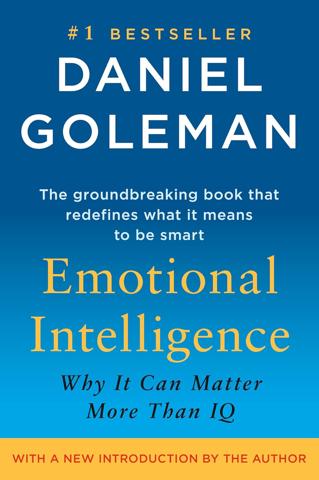
Emotional Intelligence
Why It Can Matter More Than IQ
By: Daniel Goleman
Intro:
Emotional Intelligence: Why It Can Matter More Than IQ, written by psychologist and science journalist Daniel Goleman, is a groundbreaking book that redefines what it means to be intelligent. Published in 1995, this influential work highlights the importance of understanding and managing emotions as a critical component of success in personal, professional, and social spheres. Goleman introduces the concept of emotional intelligence (EQ) and explores its five core components: self-awareness, self-regulation, motivation, empathy, and social skills. By bridging insights from psychology, neuroscience, and behavioral science, Goleman demonstrates how EQ can be just as—if not more—important than IQ in achieving well-being, leadership excellence, and fulfilling relationships. The book delves into the scientific basis of emotional intelligence, presenting compelling research and practical strategies for cultivating EQ in daily life. Goleman also discusses how emotions impact decision-making, mental health, and interpersonal connections, making a strong case for rethinking traditional notions of intelligence. With its timeless relevance, Emotional Intelligence continues to inspire readers to enhance their emotional competence and unlock their full potential.
Emotional Intelligence: Why It Can Matter More Than IQ by Daniel Goleman is a groundbreaking work that explores the concept of emotional intelligence (EQ), arguing for its pivotal role in personal and professional success. Here's a summary of the key concepts and chapters of the book:
Introduction: Goleman introduces the concept of emotional intelligence as an essential foundation for a well-balanced life. He explains that IQ is too limited in its scope to account for the full range of human abilities and potential, emphasizing the importance of self-awareness, self-regulation, motivation, empathy, and social skills. Goleman underscores the idea that these abilities, though often undervalued, are crucial for navigating the complexities of modern life. He sets the stage for how EQ can shape relationships, leadership, and well-being.
Part One: The Emotional Brain
Chapter 1: What Are Emotions For?
Goleman examines the evolutionary purpose of emotions, illustrating how they have helped humans survive by guiding quick decision-making and fostering social bonds. He highlights the role of emotions in motivation, decision-making, and creating connections within communities. Goleman also explains how emotional signals serve as an early warning system, helping individuals adapt to threats and opportunities.
Chapter 2: Anatomy of an Emotional Hijacking
This chapter delves into the brain's architecture, exploring how the emotional brain (the amygdala) can sometimes overpower the rational brain (the prefrontal cortex). The concept of an "emotional hijacking" is discussed, where intense emotions overrule logical thinking, often leading to regrettable actions. Goleman explains how understanding these processes can help individuals develop strategies to manage emotional impulses and respond thoughtfully under stress.
Part Two: The Nature of Emotional Intelligence
Chapter 3: When Smart Is Dumb
Goleman argues that high IQ provides no guarantee of success, happiness, or virtue. He shares real-life examples of individuals with high intelligence but poor emotional management skills, illustrating the limits of IQ alone. He highlights how emotional intelligence fills the gap by fostering resilience, adaptability, and social harmony.
Chapter 4: Know Thyself
This chapter focuses on self-awareness, the cornerstone of emotional intelligence. Goleman explains that understanding our emotions, strengths, and limitations is crucial to personal growth and effective decision-making. He introduces techniques like mindfulness and reflection to cultivate greater awareness of one's inner emotional landscape.
Chapter 5: Passion’s Slaves
Goleman discusses the importance of managing one's emotions. He introduces techniques for regulating feelings, including the ability to calm oneself in stressful situations and understand the consequences of unchecked emotions. The chapter explores how emotional regulation leads to better problem-solving and enhances mental clarity, even during challenging times.
Chapter 6: The Master Aptitude
The book explores motivation, emphasizing that people with high emotional intelligence tend to be more productive and driven. Goleman explains how intrinsic motivation—rooted in personal values and goals—leads to sustained effort and achievement. He outlines the role of optimism and resilience in overcoming obstacles and achieving long-term success.
Chapter 7: The Roots of Empathy
Empathy, or understanding others' emotions, is a critical component of EQ. Goleman discusses how empathy builds relationships, fosters collaboration, and enables effective communication. He highlights its importance in professional settings, such as leadership and teamwork, and explains how cultivating empathy can lead to deeper, more meaningful connections.
Chapter 8: The Social Arts
This chapter highlights the importance of social skills. Goleman explains that the ability to manage relationships effectively is often a predictor of success. He provides practical advice on improving interpersonal communication, resolving conflicts, and fostering cooperation. He emphasizes that these skills are essential in both personal and professional settings.
Part Three: Emotional Intelligence Applied
Chapter 9: Intimate Enemies
Goleman examines emotional intelligence in close relationships, addressing how emotions can both forge bonds and create turbulence. He provides strategies for developing emotionally intelligent partnerships, such as active listening, conflict resolution, and cultivating mutual respect and understanding.
Chapter 10: Managing with Heart
This chapter discusses the role of EQ in leadership and management, proposing that leaders who possess emotional intelligence can inspire and motivate teams, enhance workplace performance, and foster a positive organizational culture. Goleman shares examples of emotionally intelligent leaders and the impact of their approach.
Chapter 11: Mind and Medicine
Goleman explores the connection between emotional intelligence and health, suggesting that those who can manage their emotions are better equipped to handle stress and illness. He delves into research linking chronic stress with physical ailments and explains how emotional regulation contributes to overall well-being.
Part Four: Building Emotional Intelligence
Chapter 12: The Family Crucible
The book highlights how family dynamics and parenting styles influence the development of emotional intelligence in children. Goleman provides practical suggestions for fostering emotional growth at home, emphasizing the role of emotionally aware parents in shaping their children's future success.
Chapter 13: Trauma and Emotional Relearning
Goleman discusses the impact of trauma on emotional development and outlines ways to heal and relearn emotional responses to achieve better emotional health. He offers strategies for overcoming emotional scars and building resilience after adversity.
Chapter 14: Temperament Is Not Destiny
Goleman argues that while temperament is a starting point, emotional intelligence can be developed and cultivated over time through education and practice. He provides examples of how individuals have transformed their emotional habits to achieve personal growth.
Chapter 15: The Cost of Emotional Illiteracy
This chapter presents the societal consequences of neglecting emotional intelligence, from education systems to the workplace. Goleman stresses the importance of fostering EQ on a larger scale to address issues such as violence, bullying, and social disconnection.
Chapter 16: Schooling the Emotions
Goleman advocates for incorporating emotional intelligence training into school curricula, illustrating programs and methods for teaching EQ. He provides case studies of schools that have successfully implemented emotional education and the positive outcomes they achieved.
In the conclusion, Goleman reiterates that emotional intelligence is a set of skills that can significantly affect various aspects of life, from relationships and work to health and education. He encourages individuals and organizations to recognize and cultivate these abilities to improve overall well-being and success. Through engaging stories and scientific insights, Daniel Goleman’s book convincingly presents the case for why emotional intelligence can be more impactful than IQ in determining life success and personal satisfaction.