Robert Paxton
Robert O. Paxton is a distinguished American historian, renowned for his pioneering research on Vichy France and the history of fascism in Europe. Born on June 15, 1932, in Lexington, Virginia, Paxton grew up in a family with a strong emphasis on academia. He pursued his higher education at Washington and Lee University, where he earned a Bachelor of Arts degree. Furthering his academic journey, he attended Merton College, Oxford, as a Rhodes Scholar, receiving a Bachelor of Arts and a Master of Arts in Modern History. Paxton completed his education with a Ph.D. from Harvard University, where he focused his research on European political and social history.
Paxton's most influential works revolve around the examination of France during the Nazi occupation. His book "Vichy France: Old Guard and New Order, 1940-1944," published in 1972, challenged previous narratives by arguing that the Vichy regime was not merely a puppet state under German control but actively collaborated with the Nazis. This revelation marked a significant shift in how historians and the public understood the complexities of collaboration and resistance in occupied Europe. Paxton's meticulous research and bold conclusions have made this work a seminal text in modern history studies.
In addition to his work on Vichy France, Robert Paxton has authored several other critical texts, including "The Anatomy of Fascism," which explores the characteristics and dynamics of fascist movements across Europe. Through his breadth of research, Paxton has become an authoritative voice on the nature of fascism, providing crucial insights into how these movements rise and operate within societies. His scholarly contributions extend beyond his publications; Paxton is also a respected educator, having taught at institutions such as Columbia University, where he served as a professor until his retirement.
Throughout his career, Paxton received numerous accolades affirming his contributions to the field of history. His precise analysis and dedication to uncovering uncomfortable truths have solidified his status as a leading historian. Paxton’s work continues to influence scholars and students alike, offering a nuanced understanding of one of the most turbulent periods in modern history. His commitment to uncovering the intricacies of political collaboration and authoritarianism remains highly relevant in contemporary discussions of global political dynamics.
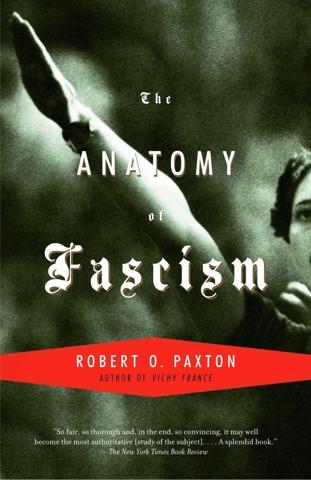
The Anatomy of Fascism
The Anatomy of Fascism by Robert O. Paxton is a comprehensive exploration of the origins, development, and characteristics of fascism as a political ideology. Paxton, a renowned historian and political scientist, delves into the complex elements that constitute fascism, drawing …