Daniel Kahneman
Daniel Kahneman is a renowned psychologist and Nobel laureate known for his groundbreaking work in the fields of behavioral economics and cognitive psychology.
Born on March 5, 1934, in Tel Aviv, he spent much of his early life in France before emigrating to Israel. Kahneman earned a psychology degree from the Hebrew University of Jerusalem and later a Ph.D. in psychology from the University of California, Berkeley.
He is best known for his collaboration with Amos Tversky, which revolutionized the understanding of human judgment and decision-making under uncertainty. Their work laid the foundation for prospect theory, a key component of behavioral economics, which describes how people assess risks and rewards differently depending on context and framing.
In 2002, Kahneman was awarded the Nobel Prize in Economic Sciences for his contributions, making him one of the rare psychologists to receive such recognition. His bestselling book, Thinking, Fast and Slow, published in 2011, popularized his research on the two systems of thought: the fast, intuitive System 1 and the slow, deliberate System 2.
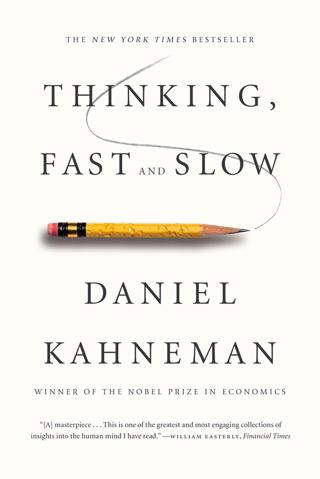
Thinking, Fast and Slow
"Thinking, Fast and Slow" by Daniel Kahneman delves into the dual systems that govern how humans think and make decisions: System 1 and System 2. System 1 operates automatically and quickly, with little or no effort and no sense of …