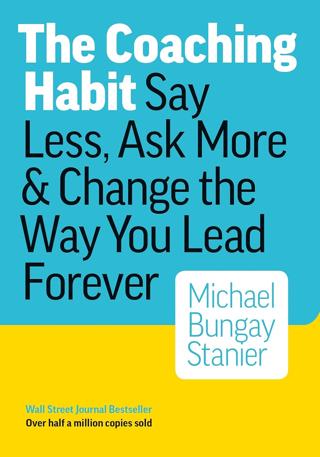
O revizie critică a cărții The Coaching Habit
Say Less, Ask More & Change the Way You Lead Forever
De: Michael Bungay Stanier
"The Coaching Habit: Say Less, Ask More & Change the Way You Lead Forever" by Michael Bungay Stanier is widely recognized for its practical and accessible approach to coaching. However, some critics have voiced concerns about various aspects of the book. One point of critique is its oversimplification of complex human behaviors and interactions. In an effort to make coaching accessible to a broad audience, the book reduces nuanced psychological concepts into seven straightforward questions. While this simplicity is part of the book’s appeal, it can oversimplify the subtleties involved in effective coaching and leadership, which often require more than formulaic questioning.
Another critique relates to the book's anecdotal rather than empirical basis. Many of the insights and recommendations in "The Coaching Habit" are derived from Stanier's personal experiences and observations, which may not always align with evidence-based practices in organizational psychology and leadership training. Critics argue that the book lacks rigorous scientific underpinning and doesn't sufficiently engage with coaching theory or draw on established research findings. This may lead readers who are seeking scientifically backed methodologies to question the validity and general applicability of the advice offered.
Critics also note that the book doesn't adequately address the context-specific nature of coaching. Coaching effectiveness often hinges on the specifics of the situation, including organizational culture, the coachee's personality, and other environmental factors. By offering a one-size-fits-all solution, the book may lead readers to overlook the need for adaption and customization in real-world applications. This can be problematic for leaders who may attempt to use these techniques inappropriately without considering how differences in context can affect outcomes.
Lastly, the book’s focus on brevity and simplicity may leave readers desiring more depth or a greater understanding of the underlying skills required for successful coaching. The emphasis on keeping things quick and simple can underplay the intensive development often needed to become an effective coach. Some readers have found that while the questions proposed in the book are a useful starting point, there is a need for more comprehensive training or resources to develop the listening and empathetic communication skills necessary to maximize their impact.
Despite these criticisms, it is important to recognize that "The Coaching Habit" has had a positive impact for many readers, providing a practical entry point into the practice of coaching. However, for those seeking in-depth, research-based coaching methodologies, additional resources and training may be needed to supplement the techniques presented in Stanier's work.
<< Înapoi la rezumatul cărții