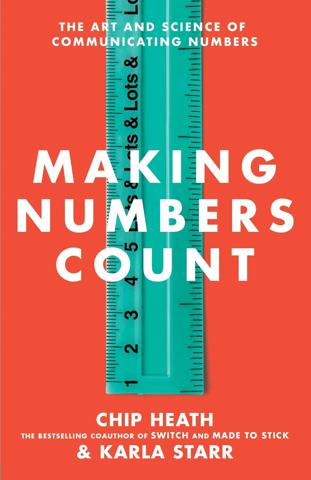
O revizie critică a cărții Making Numbers Count
The Art and Science of Communicating Numbers
De: Chip Heath, Karla Starr
Making Numbers Count: The Art and Science of Communicating Numbers by Chip Heath and Karla Starr is a book that aims to address the challenges associated with effectively communicating numerical information. While the book is generally well-received for its practical advice and engaging style, certain critiques have emerged from the scientific community and those familiar with data-driven communication.
One criticism is that the book, while offering valuable strategies for making numbers more relatable and understandable, may at times oversimplify complex data. Critics suggest that the emphasis on storytelling and simplification might inadvertently lead to a loss of important nuances, potentially resulting in misinterpretation or a lack of appreciation for the intricacies inherent in certain types of data. In scientific and technical fields, there is often a delicate balance between clarity and precision, and some argue that the book leans too heavily towards the former at the expense of the latter.
Another point of critique is the practical applicability of the techniques suggested for professionals who regularly work with numbers, such as statisticians or data analysts. Some professionals might find that the book's approaches, while creative and engaging, don't always translate well into their specific contexts where technical accuracy is paramount. The adaptations required to apply these methods might seem more suited for marketing or general public communication rather than highly specialized or scholarly environments.
Additionally, some critics have pointed out that the book does not sufficiently address the ethical implications of simplifying numbers. Communicating quantitative information responsibly includes being transparent about the limits of the data and the assumptions involved in any simplification process. This aspect is crucial in ensuring that simplification doesn't lead to misleading conclusions. The book might benefit from a deeper exploration of how to maintain ethical communication practices while making numbers accessible.
Lastly, while "Making Numbers Count" excels in providing engaging examples and techniques, some readers might feel that it lacks a deeper theoretical framework. Those interested in the cognitive science or psychology behind how people interpret numerical information may desire more in-depth exploration of the empirical research that supports the authors’ recommendations. A more thorough academic underpinning could enhance the book's credibility among those looking for evidence-based strategies rather than primarily anecdotal or experience-based advice.
<< Înapoi la rezumatul cărții