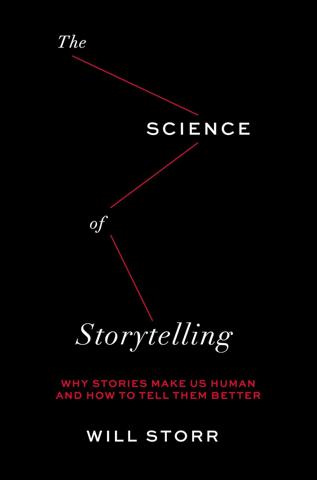
O revizie critică a cărții The Science of Storytelling
Why Stories Make Us Human and How to Tell Them Better
De: Will Storr
The Science of Storytelling: Why Stories Make Us Human and How to Tell Them Better written by Will Storr, is a book that seeks to explore the psychological and biological underpinnings of storytelling and its impact on human experience. While the book has been praised for its intriguing synthesis of narrative theory and psychological insights, there are some criticisms from the scientific community and literary critics.
One key criticism is that the book attempts to cover an expansive and complex topic—how stories shape human cognition and culture—without fully grappling with the depth of scholarly research on the subject. While Storr draws on scientific studies to back his claims, some critics argue that he selectively cites research that fits his narrative while glossing over studies that might offer contradictory findings. This could lead to an oversimplification of complex scientific theories, potentially leading readers to incomplete or skewed understandings of the science behind storytelling.
Another critique involves the subjective nature of storytelling and the difficulty in quantifying its effects scientifically. While Storr effectively highlights the evolutionary role that storytelling might play in human society, critics point out that much of what makes storytelling impactful is inherently subjective and context-dependent. This poses a challenge for any attempt to create a one-size-fits-all scientific framework for understanding storytelling. The book may at times implicitly suggest a universality of narrative structures that doesn't account for cultural, social, and individual diversity in storytelling traditions.
Additionally, there is some criticism regarding the application of scientific principles to the art of storytelling. While the book provides a range of practical tips for writers and storytellers, critics question whether the art of storytelling truly benefits from a quasi-scientific approach. Some argue that by attempting to distill storytelling into a series of psychological principles, the book risks reducing an inherently creative and fluid process to a set of rigid guidelines. This may not resonate with all readers, particularly those from more artistic or intuitive backgrounds who might feel that storytelling rejects formulaic constraints and thrives in spontaneity and emotional nuance.
Finally, while Storr's work is accessible and engaging, some academic critics suggest that the book might oversimplify certain complex ideas in order to appeal to a broader audience. In doing so, it may inadvertently reinforce popular but inaccurate beliefs about human psychology and storytelling. This highlights an inherent tension in writing about science for a lay audience: balancing accuracy and depth with engagement and accessibility. Nonetheless, despite its criticisms, The Science of Storytelling remains a thought-provoking read that encourages reflection on why stories matter to us on a fundamental human level.
<< Înapoi la rezumatul cărții