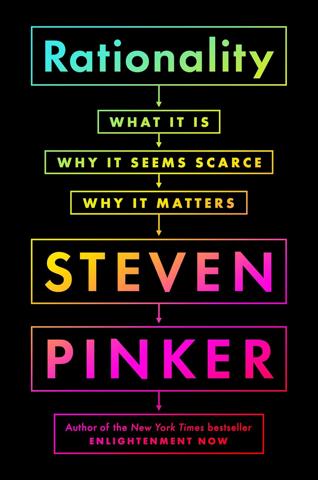
O revizie critică a cărții Rationality
What It Is, Why It Seems Scarce, Why It Matters
De: Steven Pinker
"Rationality: What It Is, Why It Seems Scarce, Why It Matters" by Steven Pinker offers a robust defense of rational thinking in an era where its deficit is often lamented. While Pinker’s work has been extensively praised for its lucid prose and compelling argumentation, it has also faced several scientific criticisms. One primary critique concerns his optimistic portrayal of rationality’s role in human progress. Critics argue that Pinker's confidence in rationality to solve global issues overlooks the complexity and multifaceted nature of these problems. For example, climate change, political polarization, and social inequalities are areas where rational solutions are often stymied by emotional, cultural, and institutional factors. Here, critics point out that Pinker may overstate the power of rationality in contexts where other human elements play substantial roles.
Another critique centers on Pinker's reliance on cognitive psychology and behavioral economics as the primary lenses through which he analyzes rationality. Critics suggest that Pinker’s account underrepresents other academic perspectives that could offer a more nuanced understanding of human behavior. For example, sociological and anthropological perspectives can provide insights into the cultural and social constructs that impact rational decision-making. Without integrating these viewpoints, Pinker’s analysis could be seen as somewhat one-dimensional, focusing mainly on individual cognition rather than the broader societal influences that shape rationality.
Moreover, scholars have pointed out Pinker's selection and interpretation of data might be biased towards a particular narrative. His emphasis on statistical reasoning and logical frameworks to define rational actions, while scientifically grounded, may at times ignore the subjective experiences and insights that are equally valuable in understanding human nature. This criticism suggests that Pinker’s framework for rationality may not fully accommodate the diverse ways in which people make sense of the world, particularly in non-Western cultures where different logics and reasoning traditions may apply.
Finally, Pinker’s assessment of the scarcity of rationality is criticized for not adequately addressing the role of power dynamics and structural inequality. Critics argue that Pinker does not sufficiently account for how these factors influence who gets to be 'rational' or whose rationality is valued in society. The critique emphasizes that what is considered rational is often dictated by those in power, possibly marginalizing alternative, yet valid, forms of reasoning. This perspective suggests that enhancing collective rationality would require addressing these systemic issues rather than solely promoting individual cognitive improvements.
In sum, while Steven Pinker’s "Rationality" delivers an articulate and thorough defense of rational thinking, scholars in various fields have critiqued it for being overly optimistic about the power of rationality, depending heavily on cognitive and economic lenses, potentially biased data interpretation, and insufficiently addressing power dynamics and structural inequalities. These critiques underline the complexity of rationality as a concept that interacts with numerous facets of human society and culture.
<< Înapoi la rezumatul cărții