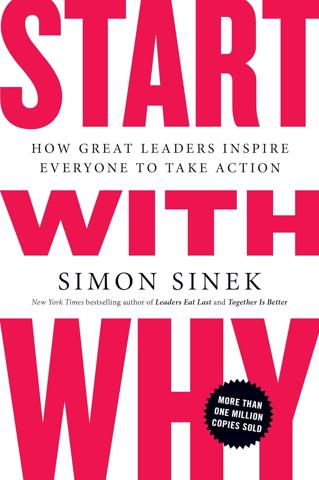
O revizie critică a cărții Start with Why
How Great Leaders Inspire Everyone to Take Action
De: Simon Sinek
"Start with Why: How Great Leaders Inspire Everyone to Take Action" by Simon Sinek is a popular book that explores the concept of beginning with a clear understanding of "why" as a means to inspire and lead effectively. While the book has been widely praised for its insightful ideas, it has also faced some scientific and analytical criticisms related to its content and approach.
One significant critique made by some scholars and business analysts is the anecdotal nature of Sinek's arguments. While Simon Sinek effectively uses stories and examples to illustrate his points, such as those involving successful companies like Apple or leaders like Martin Luther King Jr., critics argue that the book lacks rigorous empirical evidence to support its claims. The case studies chosen often highlight success stories without equally analyzing failures, leading to potential survivorship bias. This might mean the conclusions drawn are based on incomplete assessments of what makes companies or leaders successful.
Another area of criticism pertains to the simplistic nature of the central message. While the concept of "starting with why" is appealing, some have pointed out that leadership and organizational success often involve a complex interplay of factors that cannot be distilled into a single principle. Critics suggest that the "why, how, what" model—while useful as a motivational framework—overlooks other essential components such as strategy, execution, and adaptability in rapidly changing environments. Leadership is inherently multifaceted, requiring more than a central guiding mission or purpose, and simplifying it to one principle risks oversimplification.
Additionally, some experts have pointed out the potential limits of Sinek’s model in different cultural contexts. The concept of a singular "why" might resonate well within Western, particularly American, corporate environments, but may not universally apply to varying global business practices and cultural nuances. Research indicates that different cultures may prioritize other aspects of leadership and decision-making, and what is effective in one context may not be successful in another. Critics argue that the book could benefit from a more nuanced exploration of how "why" interacts with these diverse cultural perspectives.
Finally, there is the critique related to practical applicability. Critics have noted that while the book inspires readers to think about their own "why," it falls short in providing clear, actionable steps for discovering and implementing it within an organization. The book sparks motivation and offers a philosophical stance on leadership, but some readers may find it difficult to translate these ideas into concrete actions and measurable outcomes. As a result, the transformative impact on organizations might be limited to those who can already intuitively grasp and apply these concepts, leaving others without a clear roadmap to follow.
Overall, while "Start with Why" offers an engaging exploration of leadership grounded in purpose, it faces critiques primarily centered around the depth of its empirical backing, its practical application, cultural universality, and the complexity of leadership success beyond a single unifying principle.
<< Înapoi la rezumatul cărții