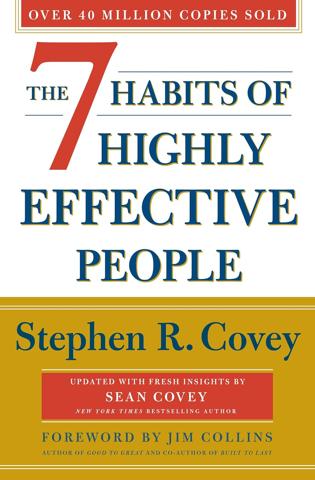
The 7 Habits of Highly Effective People
Powerful Lessons in Personal Change
De: Stephen R. Covey
Introducere:
Stephen Covey’s The 7 Habits of Highly Effective People is a timeless guide to personal and professional development. Published in 1989, the book has resonated with millions around the world for its principle-centered approach to effectiveness. Covey emphasizes that true success comes not from superficial techniques but from deeply ingrained habits rooted in character and integrity.
The book presents a framework of seven habits that progress from personal mastery to effective collaboration and continuous growth. Covey begins by addressing the importance of self-awareness, responsibility, and values as the foundation for meaningful change. From there, he guides readers through strategies for building strong relationships, fostering cooperation, and maintaining balance in life.
At its core, The 7 Habits of Highly Effective People is not just a guide to achieving goals but a manifesto for living with purpose and making a lasting impact. Its lessons are as relevant today as they were decades ago, making it a must-read for anyone seeking long-term success and fulfillment.
Habit 1: Be Proactive
This habit emphasizes taking responsibility for your life. Covey introduces the concept of the "Circle of Influence" versus the "Circle of Concern," encouraging readers to focus their energy on things they can control. Proactivity is about recognizing that you are the creator of your life and choosing to act based on values rather than reacting to circumstances.
Proactive individuals are aware of their power to choose responses and take initiative to make positive changes. Covey also underscores the importance of self-awareness and the ability to pause and reflect before reacting.
Habit 2: Begin with the End in Mind
This habit centers on the importance of defining a clear vision for your life. Covey encourages readers to visualize their desired outcomes and establish a personal mission statement. By identifying core principles and long-term goals, individuals can align their daily actions with their ultimate purpose.
The chapter also explores the concept of "mental creation" preceding "physical creation." By mentally creating a blueprint for success, you set a clear direction, which serves as a guide for decision-making and prioritization.
Habit 3: Put First Things First
Covey introduces the Time Management Matrix to help prioritize tasks based on their urgency and importance. This habit focuses on effective self-management by ensuring that your actions align with your personal and professional goals.
The essence of this habit is to spend more time on Quadrant II activities (important but not urgent) to achieve meaningful results. It encourages discipline, planning, and the courage to say "no" to distractions that detract from your priorities.
Habit 4: Think Win-Win
This habit promotes a mindset of mutual benefit in relationships and negotiations. Covey argues that effective interactions require a balance of courage and consideration to ensure all parties feel satisfied and valued.
Win-win thinking emphasizes the abundance mentality, where success is not a zero-sum game. By seeking solutions that benefit everyone, you foster trust, cooperation, and long-term success in relationships.
Habit 5: Seek First to Understand, Then to Be Understood
Effective communication starts with empathetic listening. Covey stresses the importance of understanding others' perspectives before expressing your own. This habit builds trust and reduces misunderstandings.
Empathetic listening requires focusing on the speaker’s words, emotions, and intentions without filtering them through your biases. Once you truly understand, you can communicate your views more effectively and persuasively.
Habit 6: Synergize
Synergy is about leveraging differences to create a whole that is greater than the sum of its parts. This habit emphasizes teamwork, cooperation, and valuing diverse perspectives to solve problems innovatively.
Covey illustrates how synergy fosters creativity and improves relationships by encouraging open-mindedness and collaboration. By appreciating others’ strengths, you can achieve results that exceed individual contributions.
Habit 7: Sharpen the Saw
The final habit focuses on self-renewal and continuous improvement. Covey identifies four dimensions of renewal: physical, mental, emotional, and spiritual. Regularly investing in these areas ensures long-term effectiveness and well-being.
"Sharpening the saw" involves activities like exercise, learning, meditation, and nurturing relationships. By prioritizing self-care, you maintain the energy and capacity needed to live the other six habits.
Conclusion
Covey’s The 7 Habits of Highly Effective People is a profound guide for achieving success through principled living. By internalizing these habits, readers can transform their personal and professional lives and create a lasting legacy of effectiveness and integrity.