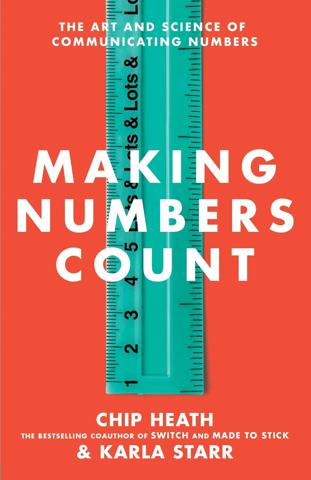
Making Numbers Count
The Art and Science of Communicating Numbers
De: Chip Heath, Karla Starr
Intro:
"Making Numbers Count: The Art and Science of Communicating Numbers" is a compelling book by Chip Heath and Karla Starr that addresses the common struggles individuals face when trying to understand and convey numerical information. The authors delve into the psychology behind numbers and how people perceive them, offering innovative strategies to make numbers more relatable and comprehensible. By transforming abstract figures into concrete and meaningful narratives, the book seeks to bridge the gap between data and understanding, making it accessible for everyone from business professionals to educators. The authors explore a multitude of imaginative techniques, drawn from successful examples across various industries, to help readers transform daunting numerical data into engaging and memorable stories. These techniques are designed not only to emphasize the importance of numbers scientifically but also to illustrate their significance in everyday life. Through a combination of theory and practical guidance, Heath and Starr provide readers with the tools needed to inspire action and foster deep comprehension, ultimately making numbers a more powerful tool in communication.
Making Numbers Count: The Art and Science of Communicating Numbers by Chip Heath and Karla Starr is a compelling exploration of how to effectively convey quantitative information in a way that resonates with audiences. The book delves into the challenges people face when interpreting numbers and provides practical techniques to overcome these hurdles, making numbers more relatable and understandable. Emphasizing the significance of transforming abstract figures into vivid, story-like narratives, the authors draw on insights from psychology, cognitive science, and communication studies to provide a guide that is both educational and engaging.
The introductory sections of the book establish the fundamental problem: humans are not naturally adept at understanding large numbers or complex statistics. The authors explain the psychological barriers that prevent most people from processing numerical information effectively. They delve into the concept of "numerical numbness," a term used to describe the phenomenon where people fail to grasp the significance of numbers when presented in isolation. The introduction sets the stage for the rest of the book by illustrating how rephrasing or reframing numbers can turn abstract data into impactful stories.
As the book unfolds, Heath and Starr introduce a series of strategies designed to enhance the communication of numerical data. One approach is to use relatable metaphors and analogies that translate abstract numbers into concepts that people encounter in everyday life. By comparing large numbers to relatable quantities, the authors demonstrate how complex data can be made more digestible. Additionally, the book covers the importance of contextualizing numbers geographically or temporally, which helps ground abstract figures in familiar settings.
The authors further discuss the power of storytelling as a tool for making numbers count. Using narrative elements to frame data can significantly improve its memorability and emotional impact. The book provides numerous real-world examples showcasing how various industries—from marketing to journalism to public policy—use storytelling techniques to effectively communicate data. This part of the book underscores the role of emotion in persuasion and information retention, emphasizing that numbers, when paired with narratives, can be a potent force for change.
Heath and Starr also address the ethical considerations inherent in presenting data. They advocate for responsible communication that informs rather than misleads, highlighting the importance of accuracy and honesty in numerical storytelling. While acknowledging the potential for misuse, they stress the ethical obligation of communicators to use these powerful techniques to enhance understanding and foster informed decision-making.
The conclusion of the book reinforces the practical applications of the strategies discussed, encouraging readers to actively engage with and critique numerical data in their professional and personal lives. Heath and Starr leave readers with a call to action, urging them to become better interpreters and communicators of numbers. This call is backed by an array of tips and exercises aimed at honing one's ability to translate complex data into insightful, persuasive narratives.
Overall, Making Numbers Count is both an educational and practical manual for anyone looking to improve their skills in conveying quantitative information. Through a combination of theory, real-world examples, and actionable advice, the book serves as a valuable resource for professionals across fields who need to communicate numbers effectively to diverse audiences.