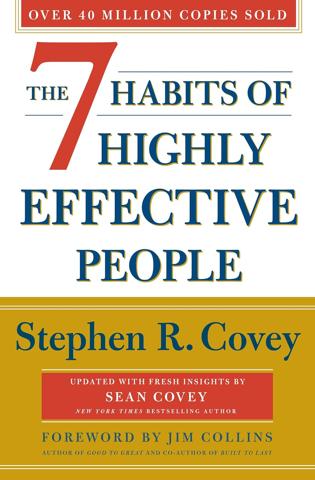
Critical Review of The 7 Habits of Highly Effective People
Powerful Lessons in Personal Change
By: Stephen R. Covey
"The 7 Habits of Highly Effective People" by Stephen R. Covey is a seminal work in the self-help genre and has been both praised and critiqued since its publication. One of the primary criticisms revolves around its reliance on anecdotal evidence rather than empirical research. Covey's book is filled with personal stories and illustrative examples, which, while engaging, do not constitute scientific evidence. Critics argue that the effectiveness of the seven habits is largely based on subjective accounts rather than rigorous scientific studies, making it difficult to evaluate their true efficacy across diverse populations.
Another point of criticism is the book's prescriptive nature, which some argue lacks flexibility. The seven habits are presented as a universal framework for personal and professional success, but the rigid application of these principles may not suit everyone's unique circumstances or traits. Critics suggest that a more flexible, evidence-based approach that adapts to individual differences and environmental factors would be more practical and effective. The notion that a one-size-fits-all model can apply to personal development has been challenged by numerous studies indicating that personalized approaches typically yield better outcomes.
Additionally, while Covey emphasizes timeless principles, some detractors point out that the book does not adequately address the complexities of modern life and work environments. It was published in 1989, and although the core principles are meant to be timeless, the global and technological landscape has changed dramatically since then. Critics argue that the book's concepts may seem outdated or insufficient when applied to today's interconnected and fast-paced world, where skills like adaptability and technological literacy are crucial.
Lastly, some scientific criticism is aimed at the lack of integration with existing psychological theories and evidence. Covey's model does not directly engage with established psychological frameworks such as cognitive-behavioral theories, personality psychology, or motivation science. Critics claim that by ignoring these well-studied areas, the book misses an opportunity to ground its advice in a solid theoretical foundation. Incorporating insights from these fields could enhance the book's credibility and applicability, potentially providing a more comprehensive guide to personal development based on a wider range of scientific perspectives.
<< Back to the book summary