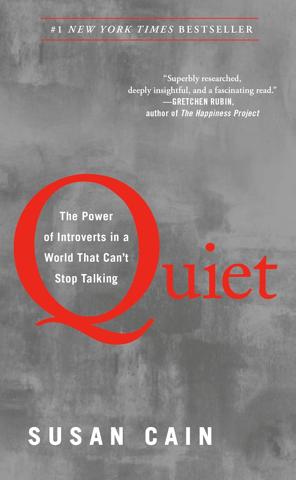
Critical Review of Quiet
The Power of Introverts in a World That Can't Stop Talking
By: Susan Cain
Quiet: The Power of Introverts in a World That Can't Stop Talking by Susan Cain has garnered significant acclaim for its exploration of the strengths and contributions of introverts, but it has not been without its criticisms from the scientific community. One point of critique centers on the book's reliance on anecdotal evidence and personal narratives, which, while compelling and relatable, may not always hold up under scientific scrutiny. Critics argue that the book sometimes draws broad conclusions from specific examples, which could potentially oversimplify the complex nature of personality and introversion.
Another area of criticism relates to the book's interpretation of psychological research. Some have pointed out that Cain's narrative occasionally leans towards confirmation bias, highlighting studies that support her thesis while overlooking or downplaying research that might contradict or complicate her arguments. For example, the book emphasizes the disadvantages introverts face in extroverted-dominated settings but does not fully address studies that highlight the adaptability and success of introverts who develop extroverted skills when necessary.
Additionally, Cain's discussion of the introvert-extrovert spectrum has been scrutinized for potentially reinforcing binary thinking about personality. Critics suggest that the book sometimes paints introversion and extroversion as two opposing and distinct categories rather than points on a spectrum where most individuals exhibit traits of both to varying degrees. This dichotomy can obscure the nuanced understanding that contemporary psychological research offers regarding human personality, where most people fall somewhere in between the two extremes.
Moreover, the cultural critique embedded in the book has been a point of contention. Cain effectively critiques Western, particularly American, societal norms for valuing extroverted qualities. However, some critics argue that her treatment might inadvertently promote a cultural essentialism, inadvertently suggesting that Eastern cultures are uniformly more appreciative of introversion. This oversimplification can ignore the complexities and variations within cultures and fail to account for how globalization and cultural exchanges are constantly reshaping these dynamics.
In conclusion, while "Quiet" has significantly contributed to the discourse on introversion by challenging societal norms and encouraging a re-evaluation of what it means to be successful and effective, it is not without its criticisms. The book's reliance on anecdotes, selective use of research, potential reinforcement of binary thinking about personality, and cultural interpretations invite further discussion and exploration. These critiques emphasize the need for a more nuanced application of psychological science to discussions about personality and societal value systems.
<< Back to the book summary