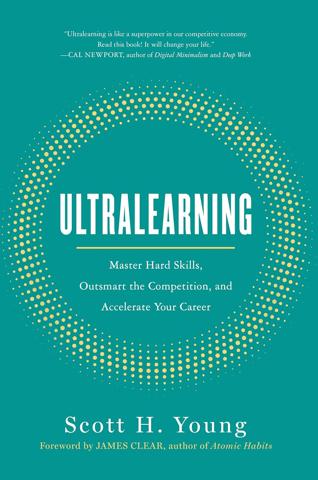
Critical Review of Ultralearning
Master Hard Skills, Outsmart the Competition, and Accelerate Your Career
By: Scott Young
"Ultralearning: Master Hard Skills, Outsmart the Competition, and Accelerate Your Career" by Scott H. Young has been generally well-received, but like any book that offers a framework for learning and self-improvement, it has faced certain criticisms. Some critics argue that while the book presents an inspiring and ambitious strategy for mastering difficult subjects, it may oversimplify the complexities involved in learning, particularly those that relate to individual differences in learning styles and capacities. The book tends to emphasize a one-size-fits-all approach, which might not effectively address the nuances of personal learning paths or the variety of obstacles different learners face.
Another criticism relates to the intensity and commitment required for the ultralearning projects described by Young. The methods outlined often necessitate a significant amount of time and effort, which may not be feasible for everyone, particularly those balancing busy professional and personal lives. Critics suggest that the book might have benefited from addressing how individuals with less available time can incorporate elements of ultralearning into their lives without needing to undertake such exhaustive projects. This gap might make the approach seem unattainable for a significant portion of readers who might otherwise benefit from less intensive strategies.
Additionally, some reviewers have pointed out that while the book is filled with anecdotal evidence and personal testimony of successful ultralearning projects, it lacks robust scientific backing. Although Young references cognitive science principles and studies, critics argue that more empirical evidence supporting the effectiveness of ultralearning compared to other learning methods could have provided a stronger foundation for his claims. A more rigorous examination of research on learning effectiveness across varied contexts would give readers greater confidence in adopting these methods.
Lastly, there is a concern among some educators that an emphasis on learning in isolation, as promoted in ultralearning, may downplay the value of collaborative and social learning. While the book encourages self-driven learning projects, it might underappreciate the importance of interpersonal interactions and feedback inherent in traditional educational environments. This solo approach may overlook how social dynamics contribute to motivation and knowledge acquisition and may not address how learners can effectively integrate external feedback into their processes.
In summary, while "Ultralearning" offers a compelling framework for mastering difficult skills quickly, it has faced criticism regarding its practical applicability, lack of comprehensive scientific validation, and potential oversight of collaborative learning’s value. These criticisms highlight areas where the book could expand or adjust to better serve a diverse range of learners and educational contexts.
<< Back to the book summary