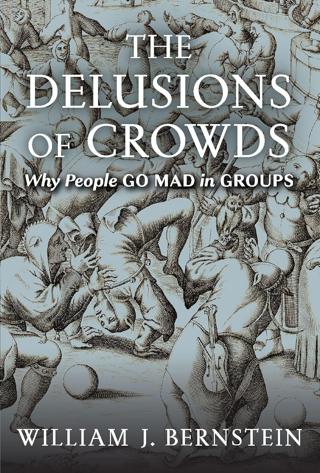
The Delusions of Crowds
Why People Go Mad in Groups
By: William J. Bernstein
Intro:
"The Delusions of Crowds: Why People Go Mad in Groups" by William J. Bernstein delves into the psychological and historical examination of mass delusions and the far-reaching impact they have on societies. Bernstein, an economist and author, explores the reasons behind collective irrationality and how such beliefs can lead to significant historical and social upheavals. In doing so, he combines insights from psychology, history, and financial markets to illustrate why groups of people are often swept up in frenzies, with potentially devastating consequences. Bernstein draws comparisons between different periods and types of collective madness, ranging from religious fervor to financial bubbles. He investigates famous phenomena such as the Tulip Mania of the 17th century, modern-day financial crashes, and mass hysteria phenomena, illustrating the recurring nature of these events throughout history. His analysis shows how emotions and social pressures often override rational decision-making, leading individuals in large groups to participate in actions or beliefs they might otherwise avoid. Through vivid storytelling and meticulous research, Bernstein sheds light on these fascinating yet perilous human tendencies. By examining both historical events and prevalent social patterns, "The Delusions of Crowds" offers readers a comprehensive understanding of the dynamics of crowd behavior and its implications. Bernstein's insights serve as a reminder of the importance of critical thinking and skepticism in the face of popular opinion, urging readers to recognize the warning signs of collective delusion as they navigate an increasingly complex and interconnected world.
The Delusions of Crowds: Why People Go Mad in Groups by William J. Bernstein explores the psychology and history behind financial and religious mass delusions. The book draws parallels between various historical events to understand why humans are prone to mass hysteria and collective irrational behavior. It is structured into chapters that delve into specific incidents throughout history, providing a comprehensive analysis of the factors that contribute to these episodes of mass madness.
The book opens with a discussion on the Tulip Mania in the 17th century, one of the most famous examples of financial bubbles. Bernstein explains how tulip bulbs were traded at exorbitant prices, creating a speculative bubble that eventually burst, leading to financial ruin for many investors. This sets the stage for the exploration of similar financial delusions throughout history, emphasizing how human nature and cognitive biases can lead to irrational economic behavior.
Throughout the book, Bernstein examines other financial crises, including the South Sea Bubble and the more recent dot-com bubble and 2008 financial crisis. By analyzing these events, he identifies patterns and recurring themes, such as overconfidence, herd mentality, and the desire for quick profits, which contribute to the cyclical nature of economic bubbles. Bernstein pairs these historical accounts with insights from psychology and behavioral economics to provide a deeper understanding of human behavior in the context of markets.
In addition to financial delusions, Bernstein addresses religious and social mass movements. He looks at phenomena like the Millerite movement, which predicted a specific date for the Second Coming of Christ, and examines how charismatic leaders, along with fear and uncertainty, can lead to widespread belief in irrational ideologies. Bernstein delves into the psychological vulnerabilities that make people susceptible to such movements, noting that similar mechanisms drive both financial and religious delusions.
The book also explores modern examples of crowd delusions, such as conspiracy theories and political movements. Bernstein discusses how the internet and social media amplify these phenomena, enabling misinformation and hysteria to spread faster and more widely than ever before. He argues that while technology has changed the medium, the underlying psychological mechanisms remain the same.
In conclusion, Bernstein draws on historical and contemporary examples to illustrate how and why people go mad in groups. By understanding the roots of these delusions, he suggests, we can better guard against them in the future. The book serves as both a cautionary tale and a compelling analysis of the interplay between human psychology and mass behavior.