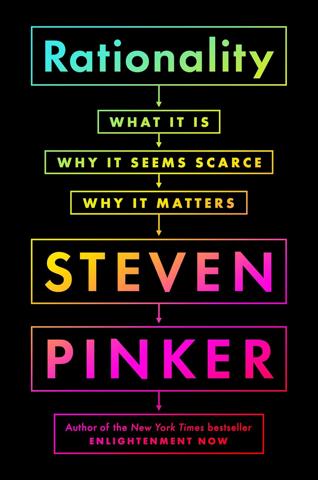
Rationality
What It Is, Why It Seems Scarce, Why It Matters
By: Steven Pinker
Intro:
"Rationality: What It Is, Why It Seems Scarce, Why It Matters" by Steven Pinker delves into the intricate concept of rational thinking and its role in human progress. Pinker explores why rationality often appears elusive in daily life, despite its critical importance in decision-making, scientific pursuit, and societal well-being. By dissecting the cognitive biases and logical fallacies that cloud our judgment, he underscores the significance of fostering a rational mindset to address the challenges of the modern world. Through compelling analysis and engaging narratives, Pinker illuminates the pathways to enhancing rationality both individually and collectively.
Overview
Steven Pinker's book "Rationality: What It Is, Why It Seems Scarce, Why It Matters" delves into the concept of rational thought and its vital role in human progress. Pinker argues that despite seemingly irrational behavior prevalent throughout society, rationality is a cornerstone of knowledge, decision-making, and morality. The book explores the tools and mechanisms that enable rational thinking, why it appears to be limited or scarce, and why understanding rationality is crucial for tackling many modern challenges.
Chapter 1: What Is Rationality?
In the opening chapter, Pinker defines rationality and distinguishes it from intelligence or mere cognitive processing. He explains that rationality involves reasoning based on logic and evidence to achieve one's goals and values. Pinker sets the stage for understanding how rational thought can be systematically developed and applied.
Chapter 2: The Illusion of Irrationality
Pinker addresses the common perception that people are overwhelmingly irrational. He examines various cognitive biases and heuristics that often lead to this conclusion. While acknowledging these biases, Pinker suggests that overlooking the context in which decisions are made can lead to underestimating actual rational behavior.
Chapter 3: Logic and Critical Thinking
This chapter focuses on the foundations of logical reasoning and critical thinking skills. Pinker highlights the importance of deductive reasoning and how it allows individuals to reach valid conclusions from established premises. He advocates for critical thinking education as a means to enhance rational decision-making.
Chapter 4: Probability and Uncertainty
Pinker discusses the role of probability in rational thought. He explains how understanding probability and uncertainty helps individuals make informed predictions and judgments under conditions of uncertainty. This chapter also explores common misunderstandings and cognitive errors related to probability.
Chapter 5: Rationality in Society
Moving from individual to collective rationality, Pinker examines how societal structures and institutions can support or hinder rational decision-making. He explores economics, politics, and social dynamics, emphasizing the potential benefits of rational action in these domains.
Chapter 6: Rationality and Morality
Pinker delves into the connection between rational thought and moral reasoning. He argues that ethical behavior can be derived from rational principles and that understanding human welfare can lead to more moral outcomes. Pinker critiques moral relativism, advocating for a universal framework based on reason.
Chapter 7: Challenges to Rational Thinking
In this chapter, Pinker outlines the various obstacles to rationality, including emotional biases, misinformation, and ideological commitments. He assesses the impact of these challenges on public discourse and scientific progress.
Chapter 8: Promoting Rationality
Pinker concludes with strategies to enhance and promote rational thinking within society. He suggests educational reforms, media literacy, and civic engagement as tools to foster a more rational populace. Pinker remains optimistic about the potential for increased rationality to solve global issues.
Conclusion
"Rationality: What It Is, Why It Seems Scarce, Why It Matters" serves as both a defense and a guide to rational thought. Pinker articulates a compelling case for rationality's central role in human achievement and offers insight into overcoming the cognitive and social barriers that impede its widespread adoption.